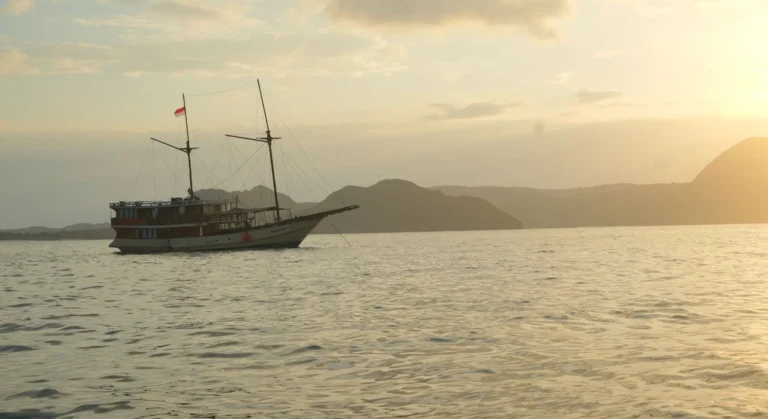
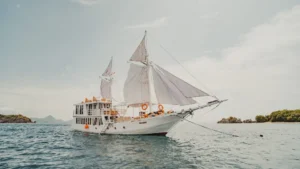
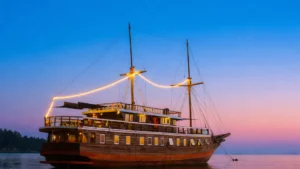
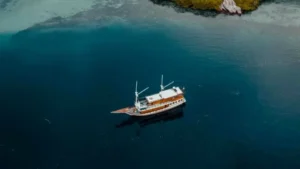
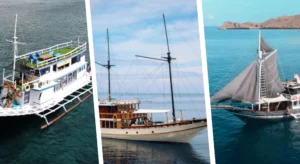
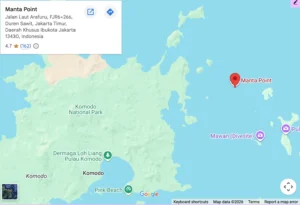
Most people picture a Komodo tour the way travel photos show it: turquoise water, a Phinisi boat gliding past green hills, dragons on a quiet beach. That picture is real — but it’s only half the story. A Komodo tour is a sailing trip through open water, and that comes with a different set of expectations than a hotel stay. Understanding that upfront is what actually makes the trip better, not worse.
A Komodo Tour Is a Sailing Adventure, Not a Resort Stay
Whether you book a Superior, Deluxe, or Luxury Phinisi, you’re on a boat crossing open sea between islands — not checking into a resort with a fixed, climate-controlled environment. That distinction matters more than which boat class you choose. A Luxury Phinisi gives you a private cabin, better finishes, and more space, but it doesn’t change the fact that you’re at sea. Weather and wave conditions affect every boat on the water that day, regardless of price.
This isn’t a downside to hide — it’s the actual nature of the trip. The reason a Komodo liveaboard feels different from anywhere else is precisely because you’re moving through the park by boat, waking up anchored somewhere new, and experiencing the islands the way they’re meant to be seen. That only works if you come in expecting an adventure, not a resort itinerary with guaranteed conditions.
Why Weather and Sea Conditions Can Shift
The waters around Komodo National Park and Labuan Bajo can change throughout the year, and even within a single trip. Wind and swell can pick up with little warning, occasionally rougher than what was forecast when you booked. When that happens, a route might get adjusted, a stop might get shortened, or a crossing might get delayed until conditions ease up.
None of this is unique to any one operator or boat — it’s simply what open-water travel involves anywhere in the world. The difference between a good experience and a frustrating one usually comes down to whether you expected it going in.
Does the Boat Class Change This? (Superior vs. Deluxe vs. Luxury)
Short answer: not the exposure to weather, just the comfort level while dealing with it. Superior boats have shared cabins and simpler facilities. Deluxe boats add more space and comfort. Luxury Phinisi boats offer private cabins and premium finishes. All three are still boats on the same sea, subject to the same conditions on any given day.
If you’re weighing which class fits you, our complete boat category comparison breaks down what each class actually includes — but don’t pick a higher class expecting it to insulate you from the ocean itself. Pick based on the comfort and privacy you want, with realistic expectations about the trip either way.
Why We Tell You This Upfront
We’d rather you read this before booking than discover it mid-trip. That’s the same reason we’re transparent about pricing and what’s included in each Komodo tour package — we’d rather set expectations correctly from the start than have someone surprised later. A traveler who knows what an adventure trip actually involves has a much better time than one who booked expecting a floating resort.
How to Prepare (Beyond Just Packing a Swimsuit)
A few things genuinely make a difference on a multi-day Komodo liveaboard:
Pack for both extremes. Days can be intensely hot with strong sun, while nights on the water — especially moving between islands — can turn cool and windy. A light rain layer and something warm for the evening are worth the extra space in your bag.
Bring your own sunglasses, sunscreen, and towel. What’s provided on board varies by boat class, so it’s safer to bring your own rather than assume.
If you’re prone to motion sickness, bring medication with you. Even calm days can have some swell, and it’s much easier to have it on hand than to need it and not have it.
Stay flexible with the itinerary. The route you see when booking is the plan, not a guarantee down to the hour. Crews adjust for safety and conditions, and that flexibility is what keeps everyone safe rather than rigidly on schedule.
Trust your crew. If they decide to slow down, delay a crossing, or skip a stop because of conditions, that decision is about your safety, not convenience. Every experienced operator in Komodo makes calls like this, and it’s a sign of a crew doing their job well, not a service failure.
Avoid booking tight connections right after your trip. Weather can occasionally push a return time later than planned. Building in a buffer day, if your schedule allows it, removes a lot of unnecessary stress.
For the fuller version of this list, see our Do’s & Don’ts guide on the homepage.
The Adventure Is the Point
None of this is meant to talk anyone out of booking — it’s meant to make sure the people who do book have the trip they were actually hoping for. The travelers who come away loving their Komodo trip are almost always the ones who came in ready for a real sailing adventure: dragons, pink sand, manta rays, and a bit of unpredictability that’s part of what makes it memorable.
If that sounds like the kind of trip you want, browse our tour packages and find the boat class and duration that fits how you like to travel — now with a clear picture of what to actually expect once you’re on board.