Most people picture a Komodo...
Komodo National Park: The Complete Guide You Should Read Before You Go
Komodo National Park is far more than “a place to see dragons”. It is a living landscape where dry savannas meet dramatic volcanic hills, and nutrient-rich seas fuel coral reefs, mangroves, seagrass beds, and thriving marine life. In 1991, UNESCO listed Komodo National Park as a World Heritage Site for its outstanding natural value, both on land and underwater.
This article covers the essentials you should know, including location, key areas, history, zoning, wildlife highlights, best seasons, and responsible travel tips.
1) Location and Overview
Komodo National Park lies in the Lesser Sunda Islands of Indonesia, between Sumbawa and Flores, within the Wallacea region, a famous biogeographic transition zone between Asian and Australasian fauna.
The main gateway for travelers is Labuan Bajo (Flores, East Nusa Tenggara). From Labuan Bajo, visitors typically reach the park by speedboat or liveaboard.
The park’s most well-known islands are Komodo, Rinca, and Padar, plus many smaller islands and extensive marine areas.
How big is the park?
You may find slightly different numbers depending on references and how boundaries are counted. Many references cite about 1,733 km² total area with roughly 603 km² of land and the rest marine habitat.
The official park site also cites around 1,817 km², again highlighting about 603 km² of land.
The key takeaway is simple: Komodo is a large protected seascape, not just a few islands.
2) Key Areas Inside Komodo National Park
Routes vary by operator and season, but these areas are widely recognized as the park’s highlights:
Komodo Island and Rinca Island
Komodo Island and Rinca Island are the two most classic trekking locations in Komodo National Park for observing Komodo dragons in their natural habitat, always accompanied by park rangers. The trekking routes usually pass through a mix of dry savanna, seasonal monsoon forest, shrubs, and open valleys where wildlife frequently crosses. On Komodo Island, the most commonly visited trekking area is around Loh Liang, a managed visitor zone designed to help guests spot Komodo dragons without disturbing their natural behavior. Meanwhile, on Rinca Island, the best-known trekking point is Loh Buaya, famous for its wide savanna landscapes and open hillsides that often make sightings easier. Even so, visitors must remain alert, because Komodo dragons can appear on the trail or near the ranger station area.
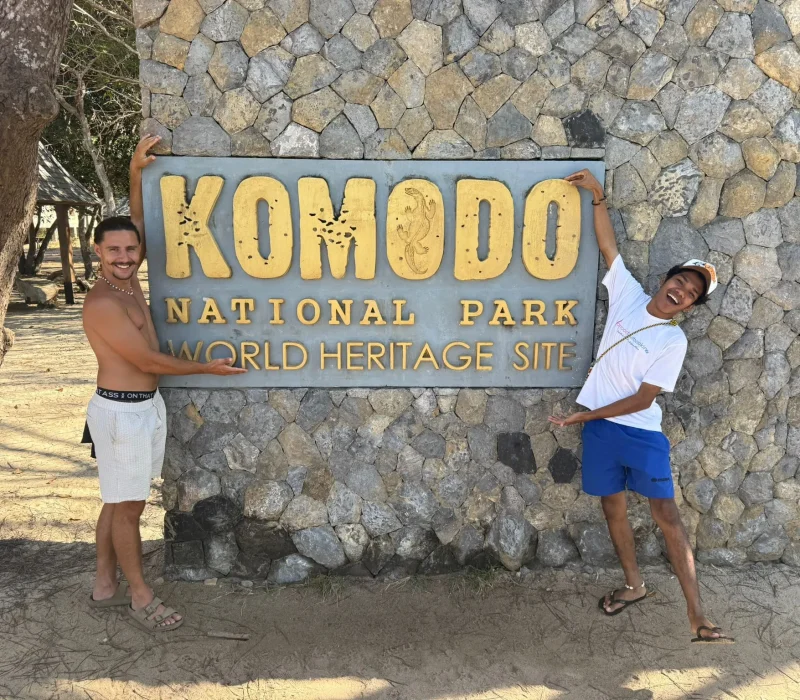
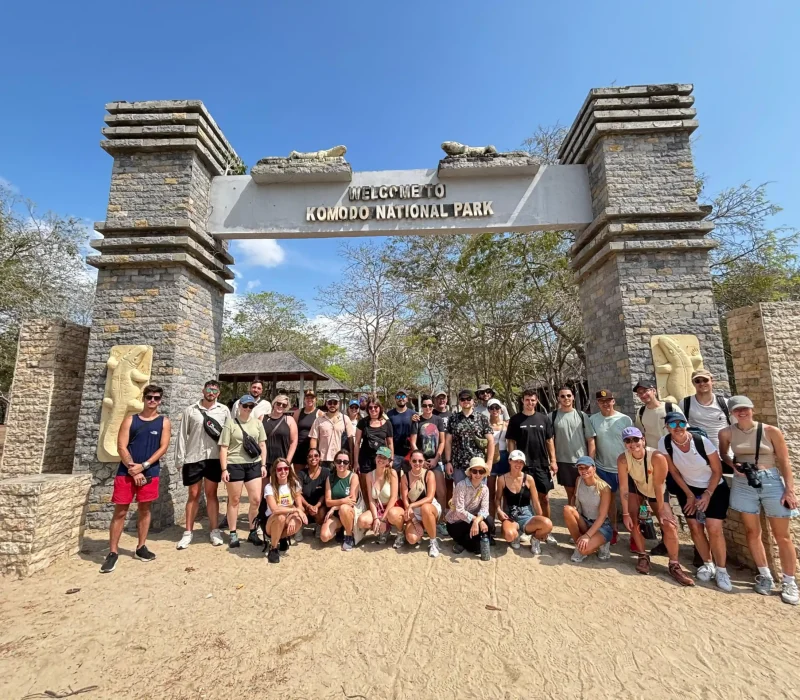
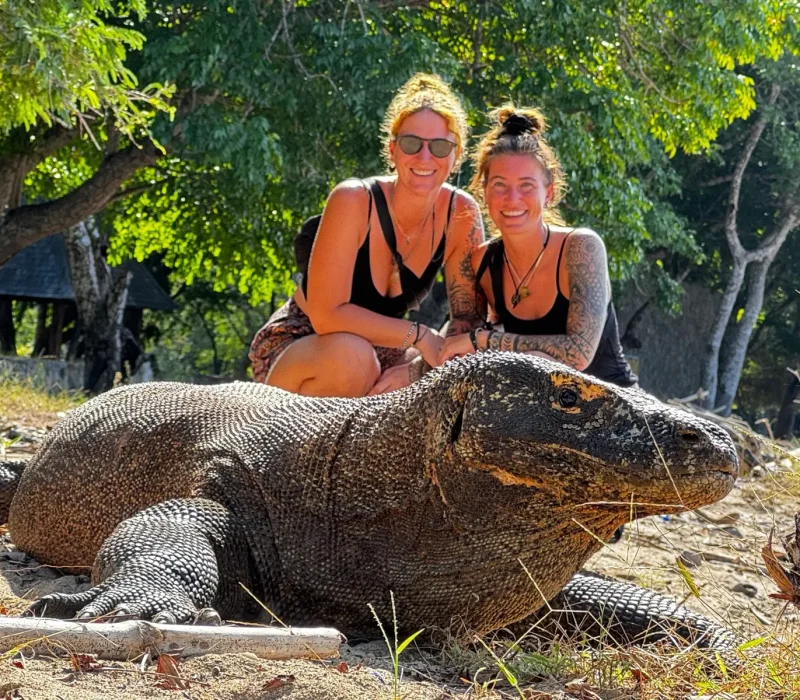
What many travelers find especially interesting is that Komodo Island is not only about trekking zones with no settlements. The island is also home to Kampung Komodo (Komodo Village), a local community that lives within the park area. Visiting here feels different from Loh Liang because it offers another perspective of Komodo: a place where people and Komodo dragons share the same landscape. Local residents have long adapted to living alongside the dragons, and in certain situations, Komodo dragons may occasionally be seen near village areas or along nearby paths, although strict safety rules and guidance still apply. Because of this unique “coexistence” aspect, some tour operators sometimes include a short visit to Kampung Komodo as part of their route, usually to experience the village atmosphere, local culture, and a community-based view of conservation.
Beyond Komodo and Rinca, it is also important to know that Komodo dragons naturally occur on other islands within the park, including Nusa Kode and Gili Motang. These are not always part of standard itineraries due to access, sea conditions, and park management considerations, but they are still part of the Komodo dragon’s natural range.
In short, Komodo National Park was established primarily to protect the Komodo dragon and its habitat, but the visitor experience can vary greatly depending on the location, from classic ranger-guided treks at Loh Liang and Loh Buaya, to a more cultural and human-nature perspective in Kampung Komodo, where life within a conservation area feels more real and personal.
PADAR ISLAND
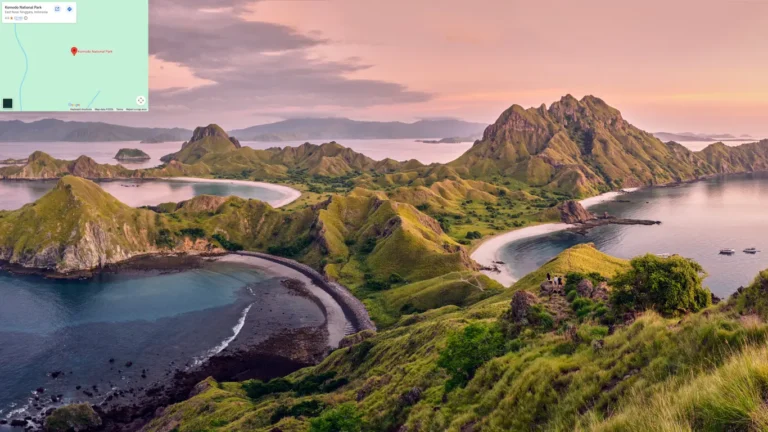
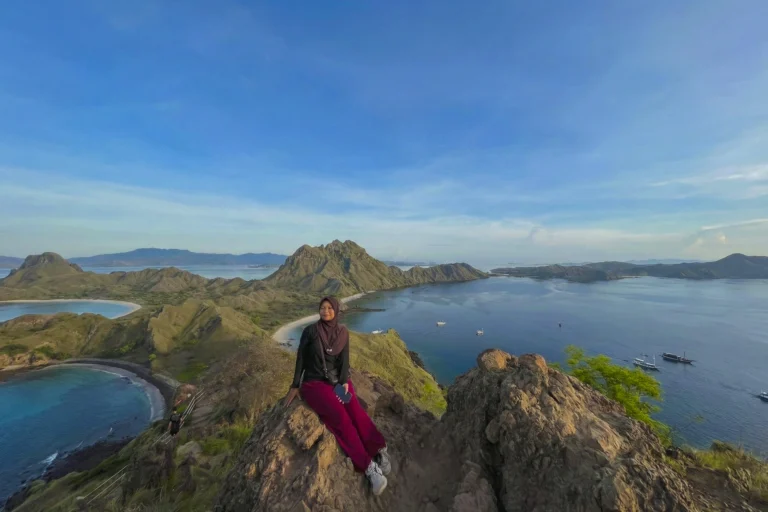
Padar Island is globally famous for its panoramic ridgelines and dramatic bay views, and it forms part of the wider Komodo National Park landscape recognized under UNESCO’s World Heritage status. It is also one of the most rewarding places in the park for sunrise or sunset, when the light turns the hills golden and the ocean below shifts from deep blue to turquoise. From the main viewpoint at the top, you can clearly see Padar’s iconic scene: three sweeping bays with three different sand colors. Many travelers describe them as pink, white, and black beaches curving around the island like a natural amphitheater. The hike itself is short but can feel intense because several sections are steep, and for safety it is commonly managed with local guidance. This is especially important because some parts can be slippery or crowded, and while Komodo dragons were long considered absent from Padar, there have been reports of sightings in the broader Padar area, so visitors are expected to stay alert and follow ranger instructions. To reach the top, you climb roughly 800 steps, often quoted around 815 to 830 steps, and the final reward is one of the most unforgettable viewpoints in Indonesia.
3) Marine zones and reef sites
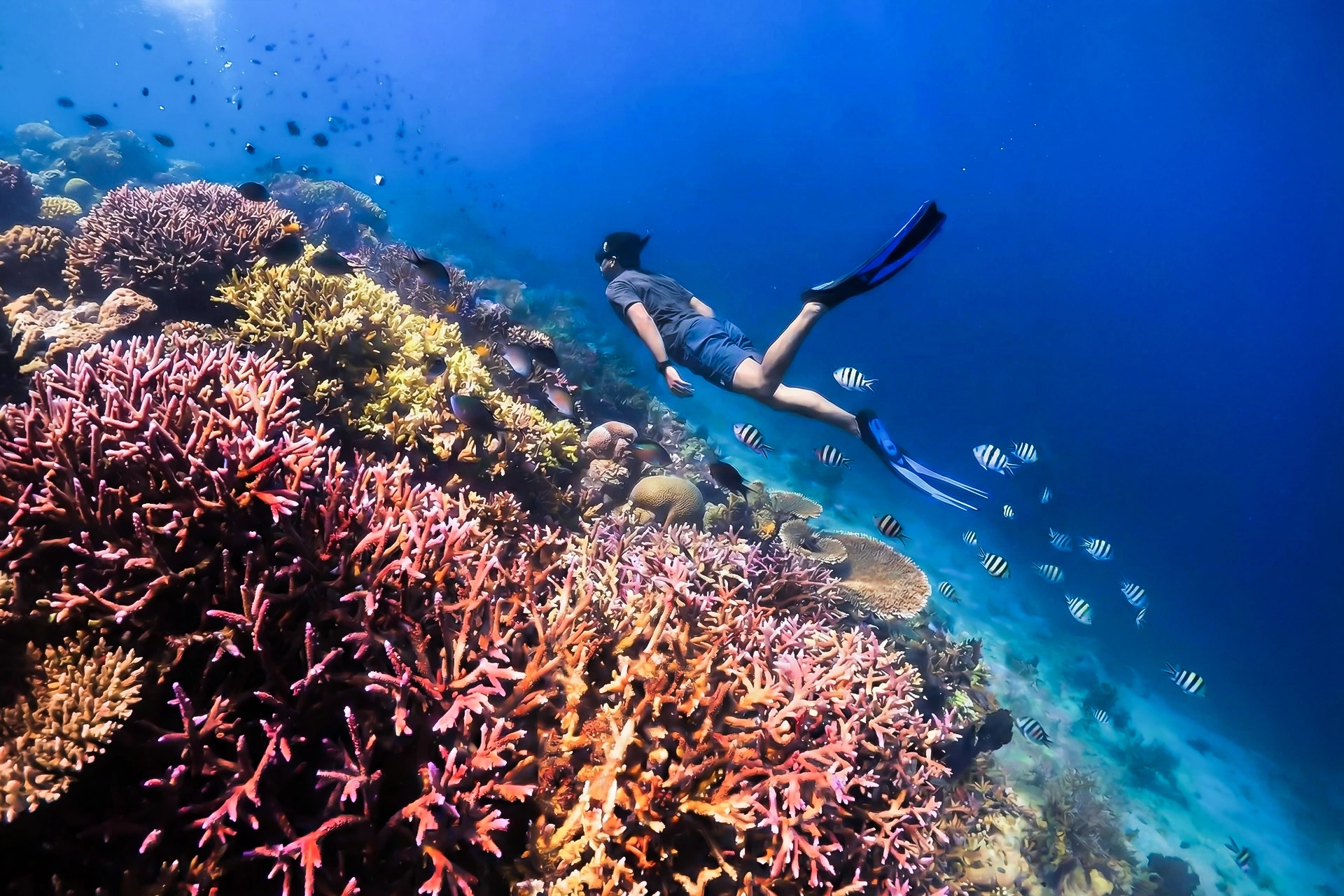
Komodo’s marine realm is often described as exceptionally rich because it combines many habitat types in one protected seascape. Within the park you can find coral reefs (from shallow gardens to steep walls), mangrove fringes, seagrass beds, and offshore structures like pinnacles and seamount-like features that concentrate marine life. These habitats work together like a connected system. Seagrass and mangroves help support juvenile fish and coastal biodiversity, while reefs provide shelter and feeding grounds for thousands of reef species.
What makes Komodo feel truly “alive” underwater is the movement of water itself. The region sits in a dynamic current network that divers often link to the Indonesian Throughflow and local upwelling, which can bring cooler, nutrient-rich water toward the surface. Those nutrients fuel plankton and the broader food web, which is why you often see dense fish schools and frequent encounters with larger animals in the right conditions. The same currents that make Komodo so productive also explain why many sites are best enjoyed with guides and proper timing, especially around tide changes, because current strength can vary significantly from one bay or channel to the next.
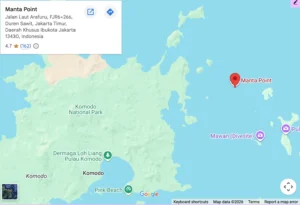
For divers, Komodo is famous for a set of signature sites that are repeatedly listed by local operators and liveaboard guides. Batu Bolong is known for vibrant reef life on a pinnacle, while Castle Rock and Crystal Rock are classic current-swept sites where divers often look for pelagics and big fish action. Manta Point (Karang Makassar) and nearby areas are well-known for manta encounters, and advanced divers often talk about The Cauldron (Shotgun) for its fast-water channel experience. Other popular names include Manta Alley, Yellow Wall of Texas, and Siaba Besar.
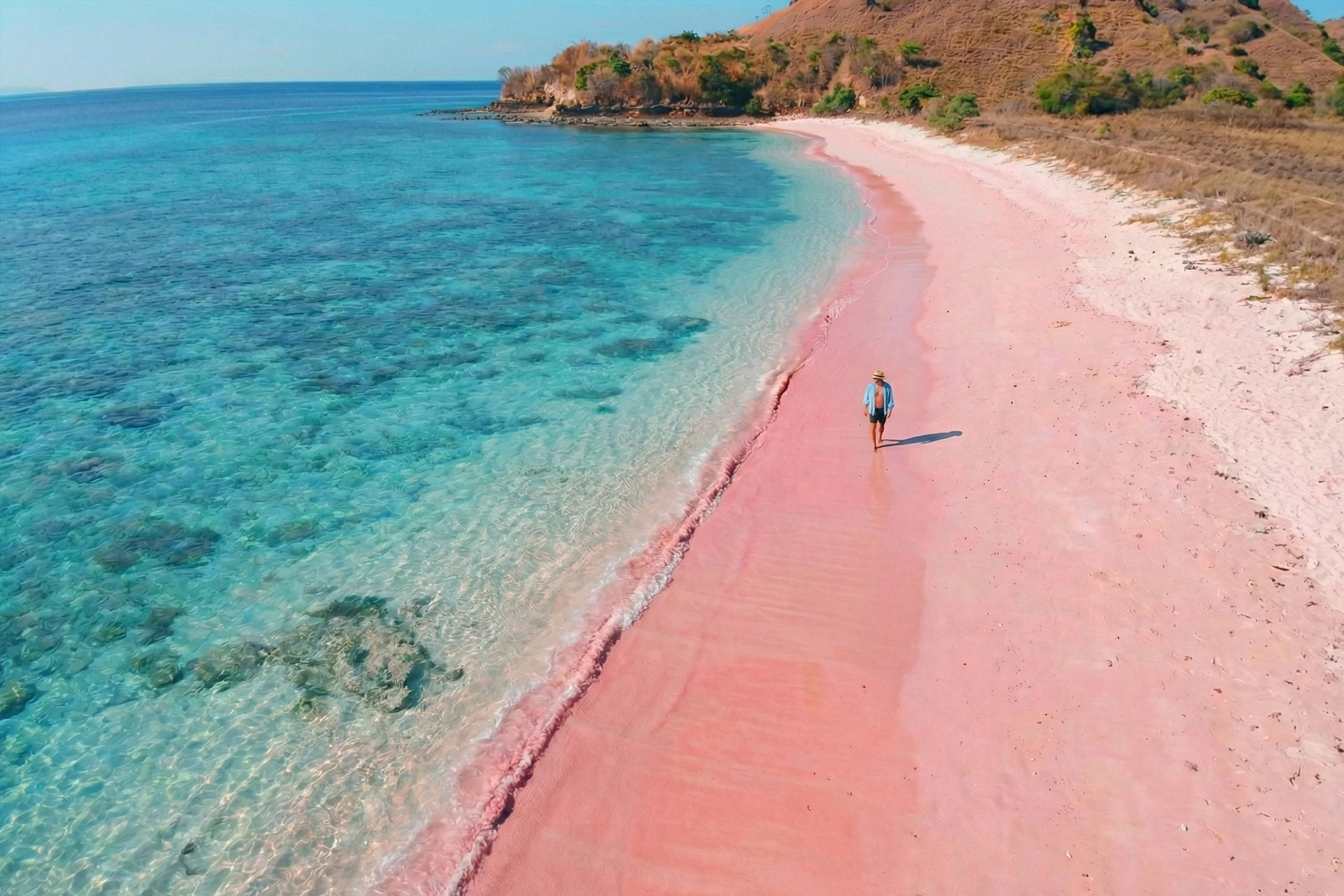
Beyond diving, Komodo also has iconic “surface beauty” stops that many travelers consider unmissable. Taka Makassar is a tiny crescent-shaped sandbar that typically appears most clearly at low tide, surrounded by shallow turquoise water and reef edges. It is often paired in itineraries with manta areas nearby, making it a favorite for short swims, drone photos, and a calm break between stronger-current locations. And for beach lovers, the park’s most famous shoreline is Pink Beach (Pantai Merah Muda / Pantai Merah), widely recognized as being within Komodo National Park and frequently visited as part of day trips and liveaboards.
4) A Short History: From “Land Crocodile” Stories to UNESCO
Long before Komodo became a global bucket-list destination, local stories about an unusually large lizard circulated among sailors and coastal communities in Flores and the surrounding islands. In the early 1900s, those stories reached Dutch colonial officials, who began documenting what people described as a “land crocodile.” European awareness accelerated in 1910, when reports from Komodo Island drew formal attention, and in 1912 the species entered the scientific record more clearly through published work by Peter Ouwens after specimens and documentation were obtained from the field.
As interest grew, Komodo dragons became a symbol of Indonesia’s unique biodiversity. Over time, it also became obvious that protecting the species meant protecting the entire ecosystem that supports it. The dragons depend on intact savanna and seasonal forest habitats, healthy prey populations, and minimal disturbance around nesting and hunting grounds. As conservation thinking matured, the focus widened from “protect the dragon” to “protect the living system,” including the marine environment that surrounds these islands and supports coastal food webs and local livelihoods.
That shift is reflected in the park’s major milestones, which are widely cited in conservation references:
1977: The Komodo Biosphere Reserve was accepted under UNESCO’s Man and the Biosphere Programme (noted as January 1977 in UNESCO’s World Heritage documentation).
1980: The area was established as Komodo National Park, with early protection strongly linked to safeguarding Komodo dragon populations and their habitats.
1991: Komodo National Park was listed as a UNESCO World Heritage Site, recognized for its outstanding natural value.
2005: The park was noted as an ASEAN Heritage Park in the UNEP-WCMC World Heritage datasheet.
Today, the story of Komodo National Park is no longer only about a rare species. It is about safeguarding a globally significant landscape and seascape, where conservation, community presence, and tourism all need to be managed carefully so the park can remain wild, healthy, and meaningful for future generations.
5) Zoning: Why Access Is Controlled
Komodo National Park uses a zoning system to protect habitats that are highly sensitive to disturbance, both on land and underwater. In simplified terms, the park is managed through zones such as core protection areas (strict conservation), wilderness zones, tourism utilization zones, research/education zones, and traditional use zones. The logic is straightforward: some areas are simply too fragile to handle frequent human activity, so access is restricted or fully prohibited, especially in the core zone, where tourism is not allowed and extraction is tightly controlled. This approach reduces pressure on Komodo dragon territories and nesting landscapes, while also protecting key marine habitats like reef slopes, seagrass beds, mangrove edges, and fish spawning and nursery areas that need stability to thrive.
In practice, zoning helps the park balance three goals at once. First, it reduces disturbance to Komodo dragons by limiting where people can walk and how groups are managed, which matters because Komodo dragons are wild predators and can be stressed or habituated by unmanaged crowds. Second, it safeguards marine breeding and nursery areas by controlling access and reducing damaging activities in vulnerable waters, especially in places where strong currents and shallow reefs can be easily harmed by anchors, careless fin kicks, or overcrowding. Third, it directs tourism into areas that can better handle visitation, meaning the park can concentrate visitor infrastructure and ranger monitoring where it is most effective, rather than spreading impact across the entire protected area.
To strengthen that balance, the park is also moving toward stricter visitor management. Multiple reports state that starting in April 2026, Komodo National Park will introduce a daily visitor cap of 1,000 people, with entry managed through a digital booking system (often reported as SiOra). The goal is to control carrying capacity, prevent overtourism at peak hours, and improve long-term ecological protection while maintaining a higher-quality visitor experience. Practically, this means travelers and tour operators will need to plan ahead, secure slots earlier, and accept that access may be limited on popular dates, especially for high-demand sites.
6) How to Get to Komodo National Park
Komodo National Park can only be explored by sea. The park sits in the middle of the Flores Sea, spread across islands and vast marine zones. There are no roads connecting the sites, no land transport inside the park, and no airport within the national park itself. That is why every visit is a marine tour, either by traditional phinisi liveaboard, speedboat day trip, or, in recent years, even large cruise ships that call in occasionally on scheduled routes.
1) The main gateway is Labuan Bajo
For most travelers, the easiest and most popular starting point is Labuan Bajo, a small harbor town on the western tip of Flores. This is the tourism hub where you will find the widest range of boat options, from budget-friendly shared trips to luxury liveaboards. Labuan Bajo is also served by Komodo International Airport (LBJ), which makes it the most practical entry point for domestic and international visitors.
From Labuan Bajo, you can choose two main styles of tours:
A. Liveaboard phinisi tours (2 days, 3 days, and longer)
This is the classic Komodo experience. You sleep on the boat, wake up to ocean views, and visit multiple islands without rushing. It is ideal if you want sunrise moments, sunset sailing, and a more complete itinerary with time for trekking, snorkeling, beach stops, and relaxed cruising. Many trips are 2D1N or 3D2N, and longer routes are also available depending on your schedule.
B. One day speedboat tour (no overnight)
If you only have one free day, a speedboat day trip is the fastest way to “touch the highlights.” You depart early from Labuan Bajo, visit several key spots, then return the same afternoon. It is efficient, but the pace is quicker and you will spend less time at each location compared to a liveaboard.
2) Another route is sailing from Lombok (4 days 3 nights)
If you want a true sea expedition, you can also join a 4D3N sailing trip from Lombok to Labuan Bajo, crossing Sumbawa waters before entering Komodo National Park. This route is popular because the journey itself becomes part of the adventure. Many itineraries include stops around Sumbawa, and some trips add Saleh Bay as a special highlight where guests may have the chance to swim near whale sharks under the right conditions.
This option is best for travelers who:
want a longer journey, not just a quick visit
enjoy sailing, ocean life, and remote island scenery
are comfortable with changing sea conditions and flexible scheduling
How to get to Labuan Bajo by flight
To start your Komodo trip from Labuan Bajo, fly into Komodo International Airport (LBJ). Labuan Bajo has flight connections from major Indonesian cities, and many travelers transit through Bali as well. Official airport references confirm the airport name and code, and route guides commonly list connections from hubs such as Jakarta and Surabaya, with Lombok and other cities often available depending on season and airline schedules.
Common flight approach that works well in practice:
Fly from your city to Labuan Bajo (LBJ) directly when available
If direct flights are limited on your dates, transit via Bali (DPS), then continue to LBJ
Flight availability changes by season, so it is smart to book earlier for peak dates and to allow buffer time.
Quick practical tips before you book
- Choose your tour style first: one day speedboat for speed, liveaboard phinisi for the full experience, Lombok crossing for an expedition vibe.
- Plan with safety in mind: Komodo waters can be dynamic. Good operators adjust routes based on tides, wind, and sea conditions.
- Arrive in Labuan Bajo at least one day before if you have tight connections, especially for multi-day liveaboards.
7) Best Time to Visit Komodo National Park
Komodo is a year-round destination, but your experience can feel completely different depending on the season. The main factor is not temperature. It is the sea. Because the park sits in open waters between islands, boat routes, comfort onboard, and even which bays are safe to anchor in are strongly influenced by wind, swell, and changing currents. That is why choosing the right month is less about chasing a perfect date, and more about matching the season to the type of trip you want.
April to November: calmer seas and easier travel days
For most travelers, the most comfortable window is the drier stretch, often considered April through November. In these months, sea conditions are generally more stable, skies are clearer, and outdoor activities feel easier. Hiking viewpoints like Padar is more comfortable because the trails are typically dry and less slippery. Boat crossings also tend to be smoother, which matters a lot if you are doing a 2D1N or 3D2N liveaboard and want to enjoy the journey, not just endure it. This period is also ideal if you want a packed itinerary with multiple stops, because reliable conditions make it easier for operators to follow the planned route.
December to March: greener landscapes, fewer crowds, more flexibility needed
The wetter period is commonly described as December to March. Rain is more frequent, cloud cover can reduce visibility for scenic viewpoints, and sea conditions can turn rough on certain crossings. This does not mean you cannot visit. It simply means you should travel with a more flexible mindset. In these months, a good tour operator will prioritize sheltered areas and adjust the route based on real-time conditions. Sometimes the schedule changes and a destination is replaced with another spot that is safer to approach that day. If your priority is comfort and a fixed checklist itinerary, the dry months are usually a better match. If you prefer fewer crowds and do not mind route adjustments, the wet season can still deliver an amazing trip.
Day-to-day conditions always matter
Even in the best months, Komodo’s ocean is not a swimming pool. Wind direction, tides, and currents can change fast, and what was calm in the morning can feel completely different by afternoon. That is why the best operators do not treat itineraries as rigid promises. They treat them as a plan that can be refined, with safety as the first rule. When a captain or guide decides to swap a snorkeling site, change the order of islands, or move to a different bay, it is usually because they are reading the sea properly.
Practical recommendations from a Komodo-style itinerary perspective
Want the smoothest liveaboard experience (2D1N, 3D2N, luxury phinisi): aim for April to November for generally calmer crossings and more predictable routes.
Only have one day (speedboat day trip): choose a month with calmer seas if you are sensitive to motion, and always expect early departures.
Traveling in December to March: book with an operator that clearly explains safety-based route adjustments, and keep your mindset flexible.
8) Safety and Responsible Travel Rules
Komodo National Park is not a zoo. It is a real wilderness, and that is exactly what makes it special. The dragons you come to see are not trained animals. They are apex predators with sharp instincts, powerful bodies, and behavior that can change quickly. A safe visit is not about being brave. It is about being smart, respectful, and disciplined. When guests follow the rules, everyone wins: you get a better experience, rangers can do their job properly, and the wildlife stays wild.
On land: how to behave around Komodo dragons
The golden rule is simple. Never treat a Komodo dragon like a photo prop. Do not feed it, do not call it, do not throw objects to make it move, and do not try to get closer for a dramatic shot. Feeding or luring changes an animal’s behavior, increases risk, and creates long-term problems for both people and wildlife. Keep a clear distance and stay on the marked trail. Those trails exist for a reason: they reduce surprise encounters and help rangers manage safety.
When you are trekking, move calmly and stay with your group. Avoid sudden movements, avoid running, and never separate to “explore a little more” on your own. If a dragon is on the path, you wait and follow the ranger’s instruction. You do not try to walk around it, block it, or force it to move. Rangers understand the terrain, the animals, and the safest way to manage a situation. Your job is to listen. In Komodo, the best photo is the one you take from a safe distance, with the animal behaving naturally.
On the water: protect the reef and follow ocean etiquette
Komodo’s underwater world is fragile, even when it looks strong. Coral reefs are living structures, and a small touch can cause damage that takes years to recover. So the rule is strict: look, do not touch. Avoid standing on coral, avoid grabbing reef surfaces, and keep your fins under control, especially in shallow areas where one careless kick can break coral tips. If you are snorkeling, float calmly and let the reef stay exactly as it is.
Trash management matters here more than most travelers realize. The ocean carries everything. A plastic cup or food wrapper that “disappears” overboard does not vanish. It becomes part of the marine ecosystem. Bring your trash back to the boat, and make sure nothing flies away on a windy deck. Responsible operators usually have a clear waste system onboard, and responsible guests follow it without exception.
Why these rules matter
Responsible travel is not only about conservation. It is also about your safety. Komodo’s environment is powerful. On land, the wildlife is real. On the water, currents and reef edges can be unforgiving. The simple habits, staying with your group, listening to rangers, not touching coral, and leaving no waste, are the habits that keep your trip smooth and memorable. The best Komodo experience always comes from respect.
Conclusion
Komodo National Park is one of Indonesia’s most extraordinary protected areas. Its value is not only in its iconic dragons, but also in the rare ecological connection between land and sea, a living system recognized internationally as globally important. When you visit, you are entering a conservation area, not a theme park. Choose ethical operators, respect local rules, and let the park remain wild. If you treat Komodo with care, Komodo will reward you with something rare in modern travel: an experience that feels real, raw, and unforgettable.
Tag Post :
Share This :
Related Article
Home Contact If you’re looking...
Home Contact If you’re looking...
Home Contact If you’re searching...
Home Contact If you’re planning...